
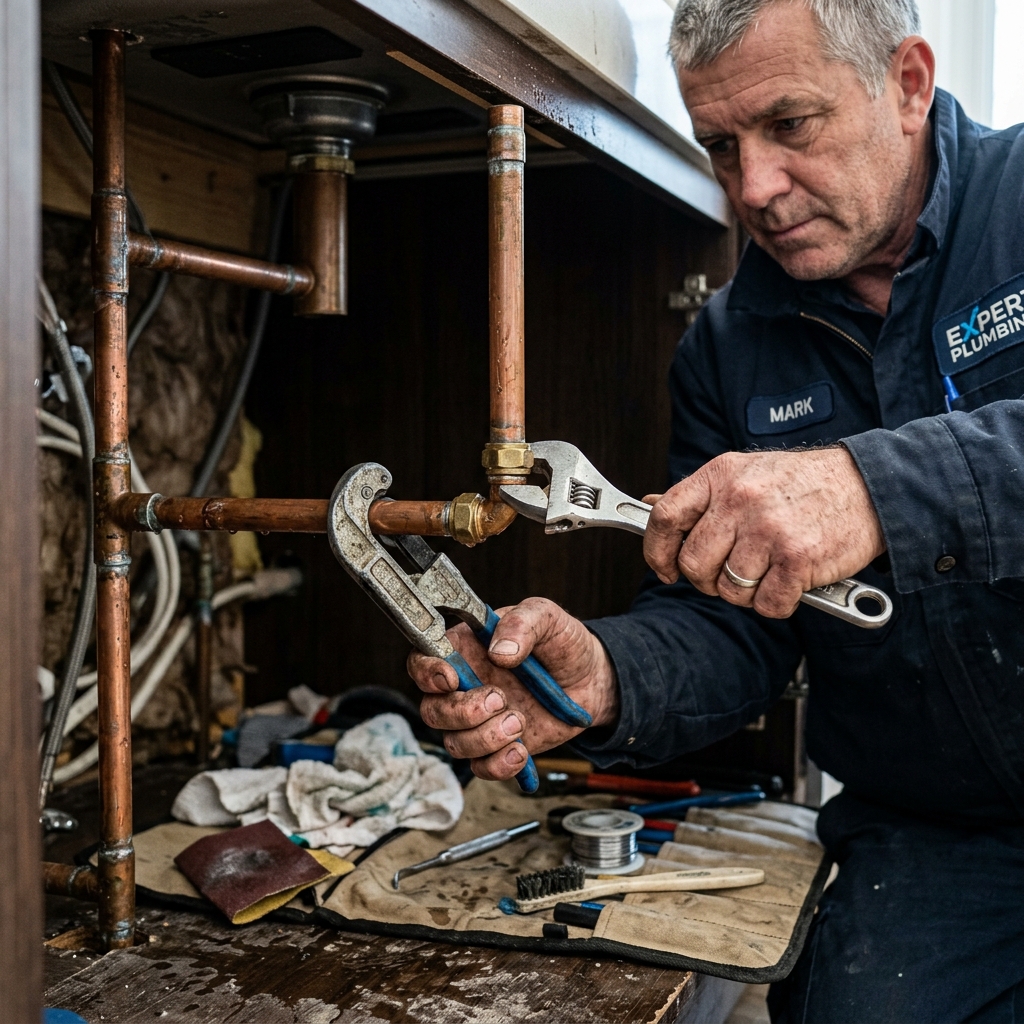
When a water line fails beneath a concrete foundation, many Hanford homeowners assume the only remediation option is to bring in jackhammers, smash through tile or hardwood flooring, and excavate trenches across their living spaces. Fortunately, modern plumbing engineering offers a cleaner, less invasive, and permanent alternative: a professional slab leak reroute Hanford service. By executing an engineered overhead bypass, the failed underground pipe is safely abandoned while a fresh, code-compliant water supply is established above the slab.
When Rerouting Beats Jackhammering the Concrete Foundation
Choosing to re-route water line Hanford systems rather than performing direct concrete excavation provides compelling long-term advantages:
- Preservation of Finished Flooring: Smashing through custom tile, luxury vinyl plank, or solid hardwood destroys floor coverings that are frequently discontinued and impossible to match. Rerouting avoids touching the finished floor entirely.
- Elimination of Structural Weakening: Jackhammering through a reinforced concrete slab can sever embedded tension cables, crack neighboring foundation areas, or disturb soil compaction beneath footings.
- Permanent Resolution of the Underground Risk: A spot repair fixes merely one single perforation on an aging copper pipe. The remaining underground run remains buried in acidic soil, virtually guaranteeing a future leak nearby. Rerouting completely removes pressurized water from beneath the foundation.
- Reduced Dust, Debris, and Living Disruption: Concrete demolition generates extensive silica dust, noise, and airborne particulates requiring containment barriers. Overhead rerouting is remarkably clean and quiet by comparison.
Bypass Slab Leak Hanford: How Abandonment Works
Technicians disconnect both ends of the leaking underground copper pipe—at the manifold and at the targeted fixture. The pipe ends are drained, crimped, and sealed with soldered brass caps. The old pipe remains harmlessly buried under the concrete, while pressurized domestic water flows exclusively through the new overhead installation.
Engineering the New Route: Walls and Attic Spaces
To bypass slab leak Hanford lines effectively, technicians utilize commercial-grade continuous PEX-a (cross-linked polyethylene) or Type L rigid copper piping. PEX tubing offers outstanding flexibility, allowing long runs through wall studs and ceiling joists with zero concealed mechanical joints or solder points inside inaccessible wall cavities.
Technicians route new water lines up from the main water supply or water heater, navigate cleanly through attic framing, and drop vertically down through interior drywall partitions directly behind targeted fixtures (sinks, showers, or washing machines). This reroute pipes through attic Hanford strategy ensures that all water connections are completely visible and accessible at fixture stop valves.
Protecting Attic Water Lines from Hanford Summer Heat and Winter Freezes
Hanford experiences dramatic seasonal climate extremes, with summer temperatures routinely exceeding 100 degrees Fahrenheit and winter nights occasionally dipping below freezing. Installing water lines through attic spaces requires strict engineering safeguards:
- Closed-Cell Foam Thermal Insulation: Every linear foot of PEX or copper tubing routed through attic spaces is encased in thick, high-density closed-cell elastomeric pipe insulation. This prevents domestic cold water from warming during scorching summer afternoons and prevents freezing during winter frost periods.
- Sub-Insulation Floor Routing: Wherever feasible, pipes are secured along the lower ceiling joist planes beneath the deep blown-in attic fiberglass insulation blanket, capitalizing on the home interior thermal buffer.
- Secure Suspension Strapping: Lines are suspended with specialized acoustic isolation clips to eliminate water hammer vibration and prevent thermal friction against framing lumber.
Considering a Clean Overhead Slab Leak Bypass?
Protect your finished flooring and eliminate sub-slab leaks permanently. Contact our Kings County plumbing specialists today.
(888) 205-7875Drywall Access, Patching, Permits, and Project Timeline
Homeowners naturally wonder about the physical impact of an overhead reroute. A typical single-line reroute in a Hanford residence requires modest, surgical drywall openings (often 6-by-6 or 12-by-12 inches) cut precisely inside closets, behind cabinets, or low on drywall partitions where pipes transition vertically. These small access openings are neatly patched, textured, and prepped for paint upon completion.
Most single-line reroutes are successfully completed within one to two business days, minimizing disruption to your family routine. All rerouting procedures are performed in accordance with City of Hanford and Kings County building codes, including mandatory pressure testing and municipal permit sign-offs to protect your home value and resale disclosures.
To learn about isolating the leak location prior to rerouting, explore our slab leak detection procedures. If your home has suffered multiple copper line failures, review our whole-house repiping service or consult our comprehensive slab leak repair in Hanford guide.