
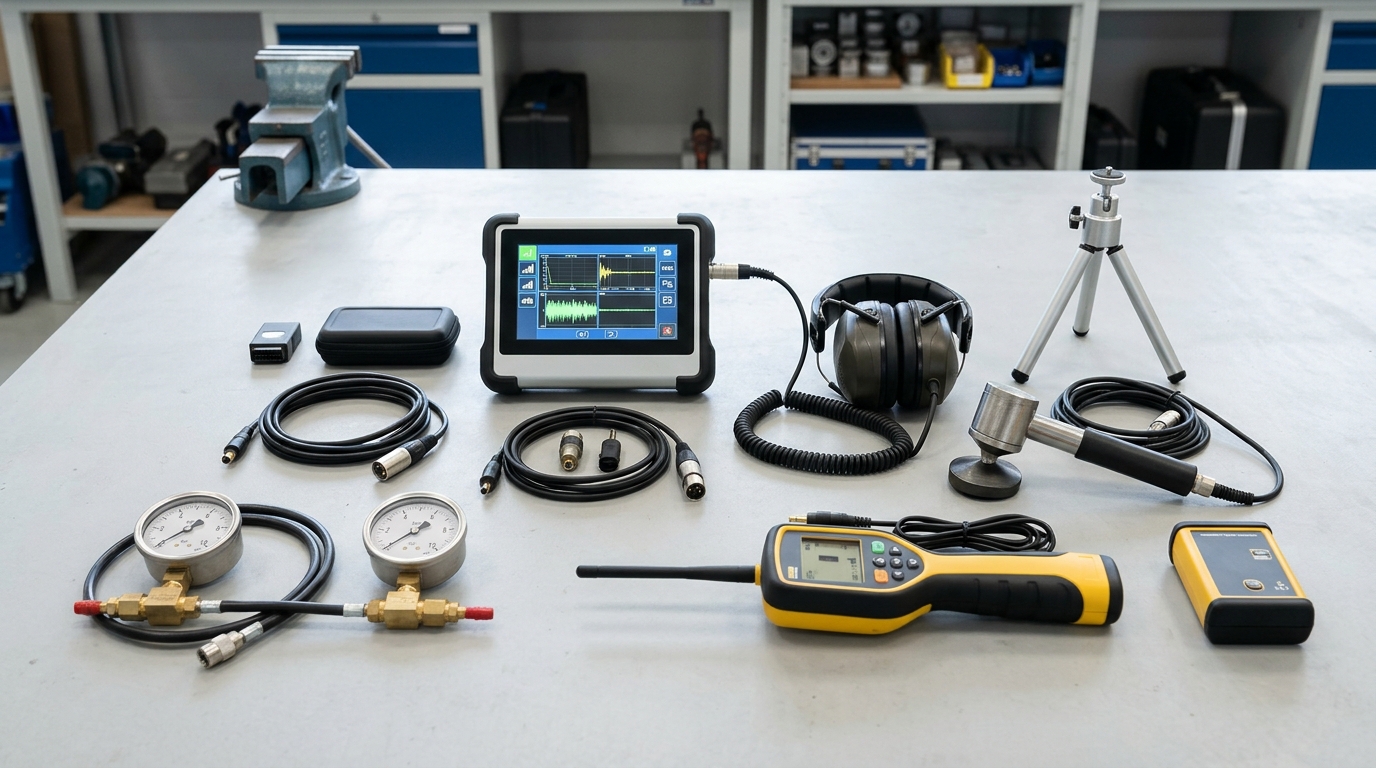
Detecting a pressurized water leak beneath a solid concrete foundation requires scientific precision rather than destructive trial-and-error digging. In Hanford, where ranch homes built over expansive clay soils are vulnerable to subterranean pipe friction and hard-water pitting, accurate slab leak detection Hanford services prevent thousands of dollars in unnecessary flooring demolition. When you suspect an under-foundation water line failure, identifying the exact coordinates of the break before touching concrete is paramount to protecting your home.
Warning Signs That Call for Immediate Slab Leak Testing
Sub-foundation leaks rarely remain hidden forever. Subtle clues emerge throughout living spaces indicating that pressurized domestic water is escaping into the subgrade soil bed:
- Continuous Water Meter Dial Movement: With all indoor plumbing fixtures, outdoor irrigation, and ice makers turned off, the meter flow indicator continues rotating steadily.
- Persistent Sound of Running Water: A constant low hiss or running water resonance heard near hallways, bathrooms, or kitchen baseboards when the house is quiet.
- Floor Surface Temperature Anomalies: Unexpected warm sections on tiled or carpeted floors indicating a hot water supply failure beneath that area.
- Unexplained Utility Bill Surges: A sharp increase in Hanford municipal water utility bills without any change in household consumption habits.
- Spongy Floors and Foundation Gaps: Buckling engineered wood, cracked tiles, or damp moisture blooms manifesting across baseboard junctions.
Simple Homeowner Water Meter Test
To confirm active water loss before scheduling diagnostics, close every fixture inside the home. Open your water meter box near the curb. If the red triangle or small flow indicator dial moves even fractionally over 15 minutes, pressurized water is escaping from the system.
The Scientific Diagnostic Process: How Leaks Are Pinpointed
Professional sub-slab diagnostics proceed through a systematic series of non-destructive testing stages designed to isolate the failed line down to inches:
1. Pressure Isolation Testing
The technician connects high-precision digital pressure gauges to the home plumbing network and isolates the cold water supply from the hot water loop. By charging each line with compressed air or nitrogen and measuring pressure decay curves, the technician mathematically confirms whether the leak exists on the cold-water distribution line or within the domestic hot-water loop.
2. Electronic Leak Detection and Line Tracing
To accurately find the leak, the physical path of the pipe embedded beneath the foundation must be mapped. Technicians introduce a low-voltage high-frequency radio signal transmitter directly into the copper pipe manifold. An electronic receiver wand tracks the electromagnetic signal across floor coverings, tracing the underground pipe layout through solid concrete and rebar grids.
3. Acoustic Ground Microphones and Frequency Listening
Pressurized water discharging through a microscopic pinhole creates high-frequency acoustic vibrations against surrounding gravel and aggregate concrete. Utilizing advanced acoustic listening discs and noise-canceling headphones, the technician listens through tile, hardwood, and carpet at regular intervals. By measuring sound amplitude and harmonic frequency peaks, the exact point of pipe failure is isolated.
4. Infrared Thermal Imaging
When hot water lines rupture beneath concrete, escaping heated water creates a thermal bloom that radiates upward through the concrete slab. Infrared thermal imaging cameras visually display temperature gradients across the floor, illuminating the distinct circular heat plume that indicates the leak center.
Need Accurate Electronic Leak Detection in Hanford?
Avoid unnecessary concrete destruction. Speak with an experienced sub-slab diagnostic technician serving Hanford and neighboring communities.
(888) 205-7875Why Surgical Location Keeps Concrete Demolition Minimal
In decades past, inexperienced plumbers attempted to locate sub-floor leaks by breaking through concrete in arbitrary areas where moisture showed on the surface. Because water travels horizontally along gravel beds and concrete cold joints before finding an escape path, the visible moisture spot is frequently ten or twenty feet away from the actual pipe break. Indiscriminate jackhammering ruins flooring, creates dust contamination, and compromises structural foundation integrity. Pinpoint detection allows any spot excavation to be restricted to a neat 12-by-12 inch opening directly over the failed pipe segment.
The Comprehensive Written Leak Report
Following diagnostic completion, property owners receive a formal, comprehensive written leak detection report. This technical documentation details:
- The exact plumbing loop affected (hot water line, cold supply line, or exterior branch).
- Precise architectural location and depth of the pipe breach within the residence.
- Static pressure readings and pressure loss rates recorded during testing.
- Photographic evidence including thermal imaging heat-map scans and mapped pipe traces.
- Actionable engineering recommendations comparing localized spot repairs against overhead slab leak reroute strategies or comprehensive whole-house repiping.
This report proves essential for homeowners coordinating with adjusters for slab leak insurance documentation, providing verifiable proof of accidental sub-slab plumbing failure.
If you suspect an active foundation line failure, consult our slab leak repair in Hanford overview to learn how complete diagnostic and restoration workflows protect your property.